

“The article explains it. The chart clarifies it. The map locates it. Then the tab closes, and the scale slips away.”
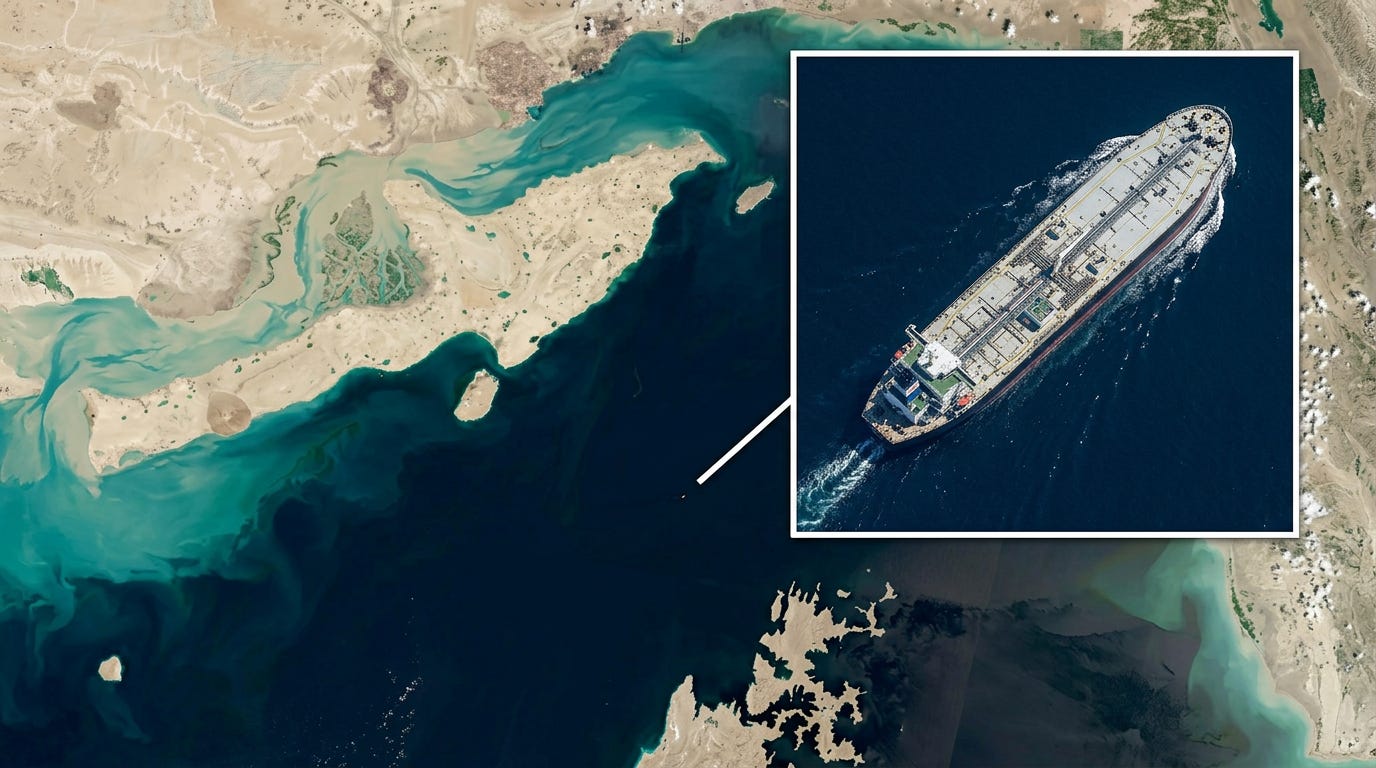
For the last weeks I have been building a game about a queue.
That sounds small, but the queue is the point. The Strait of Hormuz is usually presented as a map, a percentage, a geopolitical phrase that appears in a headline and then disappears from the body. One fifth of the world’s seaborne oil passes through it. Fertilizer, LNG, food, military escorts, insurance risk, fuel prices, diplomatic pressure - everything narrows into a strip of water that most people can point to and still not really feel.
When a chokepoint closes, the story becomes too large to hold. It moves through shipping markets, fuel stations, kitchens, ports, hospitals, ministries, and news alerts. The article explains it. The chart clarifies it. The map locates it. Then the tab closes, and the scale slips away.
I wanted to try a different container.
The result is BOTTLENECK, a free browser newsgame about the 2026 Strait of Hormuz crisis. You play a maritime coordinator with three transit slots per day for ten days, while two thousand ships are waiting outside the chokepoint. Each day you decide what gets through: oil tankers, food bulkers, LNG carriers, fertilizer ships, container vessels, military escorts. Every slot is a triage decision. Every decision moves pressure somewhere else.
Block oil and fuel queues form in Mumbai. Prioritize food and Japan loses LNG. Authorize a military escort and Tehran’s trust collapses. None of these decisions are clean. That was the design brief from the beginning: do not make the crisis look solvable just because the interface needs a button.
Three transit slots a day. Two thousand ships waiting.
PLAY BOTTLENECK
WATCH THE TRAILER
51 seconds. The chokepoint. The cascade. The triage.
SEE THE SYSTEM MOVE
Five minutes of desktop gameplay from the crisis desk.
WHY I MADE IT AS A GAME
Some journalism loses force when it remains only explanation. We can describe the Hormuz crisis in all the correct ways. We can publish timelines, maps, charts, quotes from officials, shipping analysis, oil market reactions, humanitarian warnings. All of that work matters. BOTTLENECK depends on it completely.
But reading about a queue is different from being responsible for one.
That difference is what interested me. I did not want to make a game about Iran as a villain, or a fantasy of command, or a geopolitical toy. I wanted to make the queue tangible. I wanted the player to feel the repeated pressure of a limited system: three slots, too many ships, no innocent answer. The game does not ask whether you are smart enough to solve the crisis. It asks what kind of damage you choose when every option has a cost.
This is where the format matters. A newsgame can do something an article cannot do as easily: it can make structure felt. It can turn abstraction into a repeated action. It can make the player understand that the problem is not a lack of information, but the collision of incompatible needs under pressure.
WHAT IS INSIDE BOTTLENECK
The game is built on verified reporting: 125+ linked sources, real maritime transit data, 40 modeled ships, and five forces reacting to every decision - Tehran, Washington, the shipping industry, affected populations, and your own credibility. The cascade system is not decoration. It is the journalism layer translated into mechanics.
At the end of the game, your decisions are compared with the real-world collapse in daily transits through the Strait of Hormuz. The point is not to win. The point is to understand what kind of problem this is, and why the word “chokepoint” is not just a metaphor. It is a physical condition with political, economic, and human consequences.
BOTTLENECK takes 15-20 minutes to play. It runs in a browser. It is available in English, Polish, and Spanish. It is free, ad-free, independent, and built as part of my broader practice of Artistic Journalism: rigorous reportage given physical, spatial, interactive, or performative form.
I keep returning to the same question in my work: what other containers can reporting live inside? Sometimes the answer is a stage. Sometimes it is an exhibition. Sometimes it is a wall in the city. This time it is a browser game.
THE POINT IS NOT
TO PRODUCE MORE MEDIA.
IT IS TO CREATE WORK THAT CUTS THROUGH NUMBNESS
This post is the launch announcement. The deeper case study of how I built BOTTLENECK will live separately, because that is a different story: production process, AI collaboration, structure, speed, mistakes, and what changed in the work because of it.
For now, I would rather you play the thing first.