

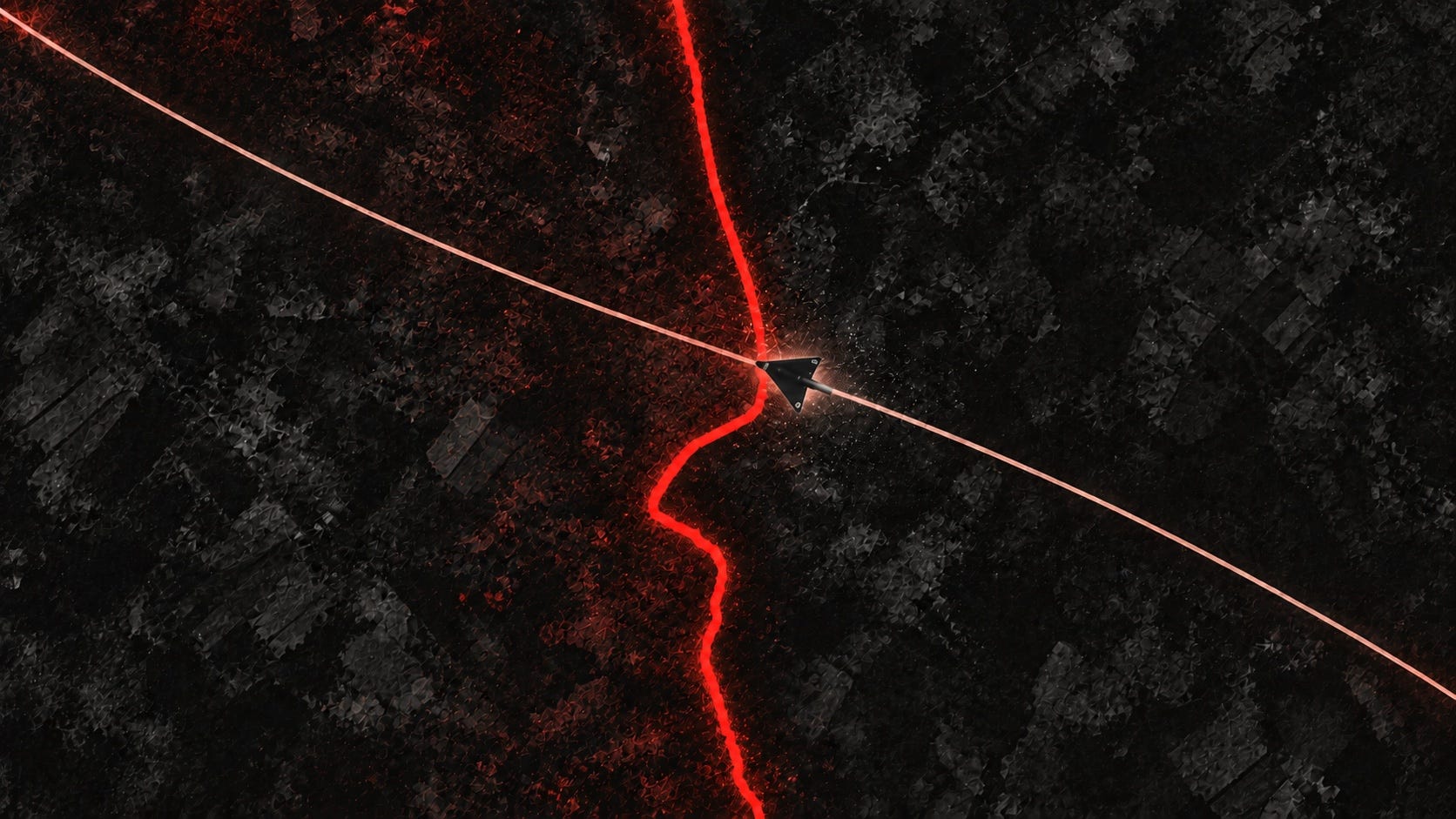
A place name in a report looks straightforward until you have to put it on a map. The source names a village. You can locate the village. But placing a pin at its centre can suggest you know exactly where something fell, burned or was found. A small design decision has quietly added a claim to the reporting.
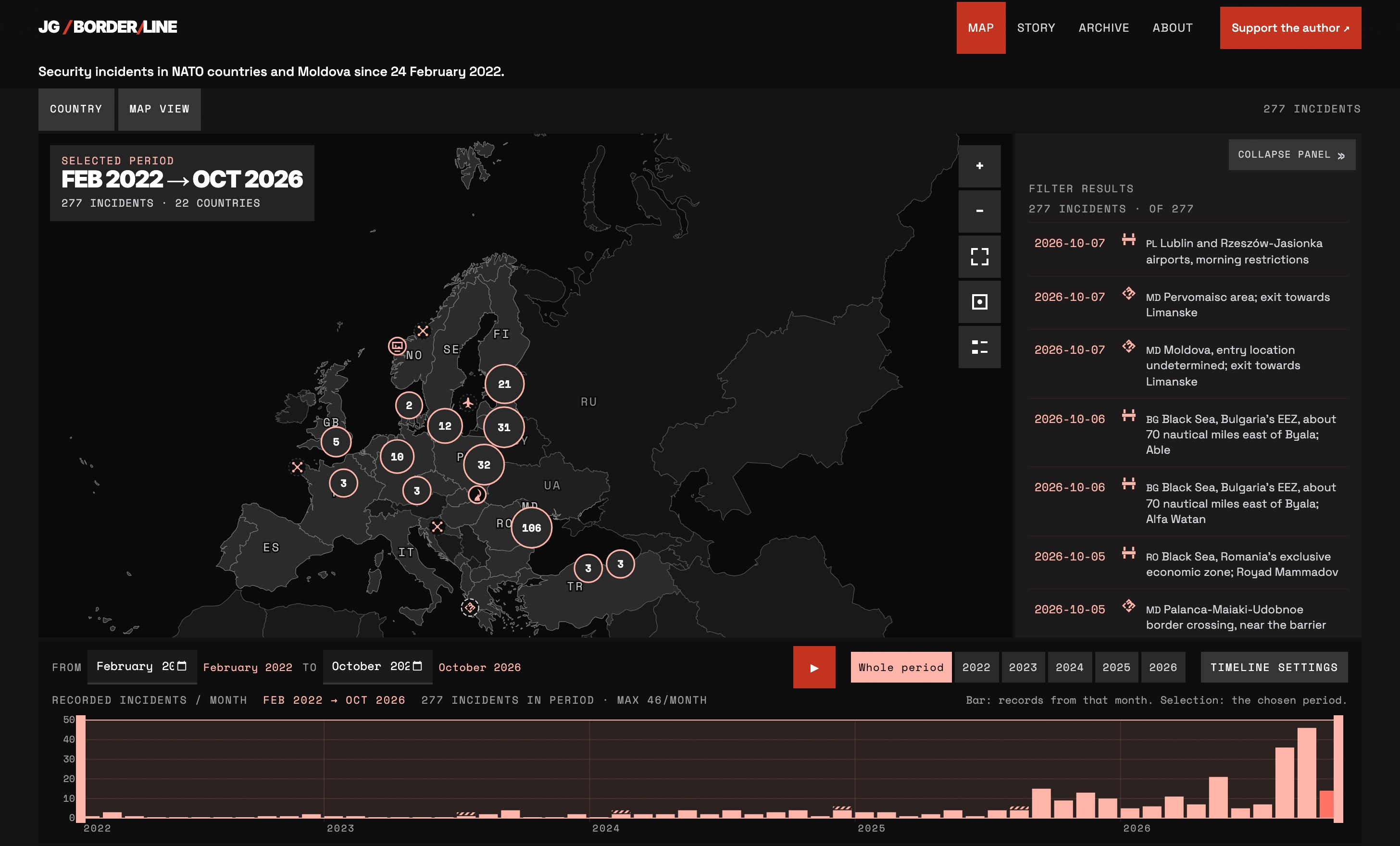
That is one of the problems behind Borderline, my register of security incidents in NATO countries and Moldova in the context of Russia’s war against Ukraine. It brings together events since 2022: airspace violations, drone reports, arson, sabotage and cyberattacks with physical effects. You can move through them on a map and timeline, search an archive, or follow a guided story through selected cases. The project is available in English and Polish.
I built it to make these reports easier to return to, compare and question. That meant deciding what each point could honestly tell a reader.
Giving the reports somewhere to stay
A drone report, an airport closure and an investigation into a fire each arrive with their own news cycle. There is an initial account, a response from the authorities, perhaps a correction. Later findings may appear months after the event, when most readers have moved on. Reconstructing that history requires finding the original report and then working forward through everything that changed.
Borderline gives those developments a shared structure. An incident keeps its place in time while its record can be updated. A later indictment or court finding belongs to the existing event. Counting it as another incident would make the timeline misleading.
Putting records beside one another also makes different questions possible. Which kinds of incident recur in a particular country? What was reported during a given month? Which cases have an official attribution, and which remain unresolved? The archive lets readers follow those questions beyond the examples I chose for the story.
There are limits to what that comparison can establish. The register is an editorial selection covering current NATO members and Moldova, with relevant incidents at sea recorded separately. Its coverage is incomplete. A period with more entries may reflect changes in the underlying events, the available reporting or the research collected here. The count needs to be read with those limits in view.
What a point can tell you
The distinction between an event and its explanation runs through the project. An airport can confirm that operations stopped while the cause remains uncertain. A reported sighting can have consequences even when the object is never identified. The record needs room for both facts.
Responsibility requires its own assessment. Borderline records who named a perpetrator and the basis for that claim. Court findings, official statements, suspicions and journalistic investigations have different evidential weight. Equipment origin is another piece of information: identifying where an object was manufactured does not establish who operated it or ordered its use.
This matters when looking at the whole map. A dense field of markers can make separate cases feel like one continuous operation. The visual impression arrives before the reader opens a source. I want the interface to let people examine possible patterns while keeping the evidence for each case accessible.
Inclusion in Borderline does not, by itself, attribute an incident to Russia.
The same discipline applies to geography. Most coordinates represent places named in reporting. Some events extend across several locations and remain in the archive without a single pin. Where a route is schematic, it is labelled accordingly. Drawing a line between reported locations cannot establish the path taken between them.
The map is part of the edit. These choices shape what the reader understands before they have read a paragraph.
Letting readers choose their depth
Borderline has several ways in because people arrive with different questions. The map offers a first orientation in place and time. The story provides a guided route through selected cases. The archive supports a more deliberate search, with filters and access to individual records. The methodology explains the scope and the decisions behind them.
I like the possibility of moving between those modes. Someone can begin with a chapter, become interested in one country, then follow a particular event back to its sources. The work should make that movement possible without requiring everyone to read in the same order.
It also has to show where the research is unfinished. The initial register drew on Polish and English Wikipedia survey lists. Additional institutional statements, case documents and media reports support part of the collection; some entries still rely on those lists. The methodology makes that distinction explicit. Checking a record against an additional source and establishing responsibility are separate tasks, and the project records them separately.
A form that can hold the next finding
Borderline continues a question I explored in BOTTLENECK: what can readers understand when reporting takes a form they can move through? In that project, the encounter was organised around decisions in a game. Here, the work is organised around dates, places, sources and the ability to revisit a case.
That ability matters to me. An incident can remain unresolved long after it stops being news. A later finding can change how an earlier report should be read. I want Borderline to hold that unfinished history in a form people can inspect, with enough detail to see what has been established and what still needs work.
Start with the story for a guided introduction, or open the archive to follow your own question. There is also a Polish version.