

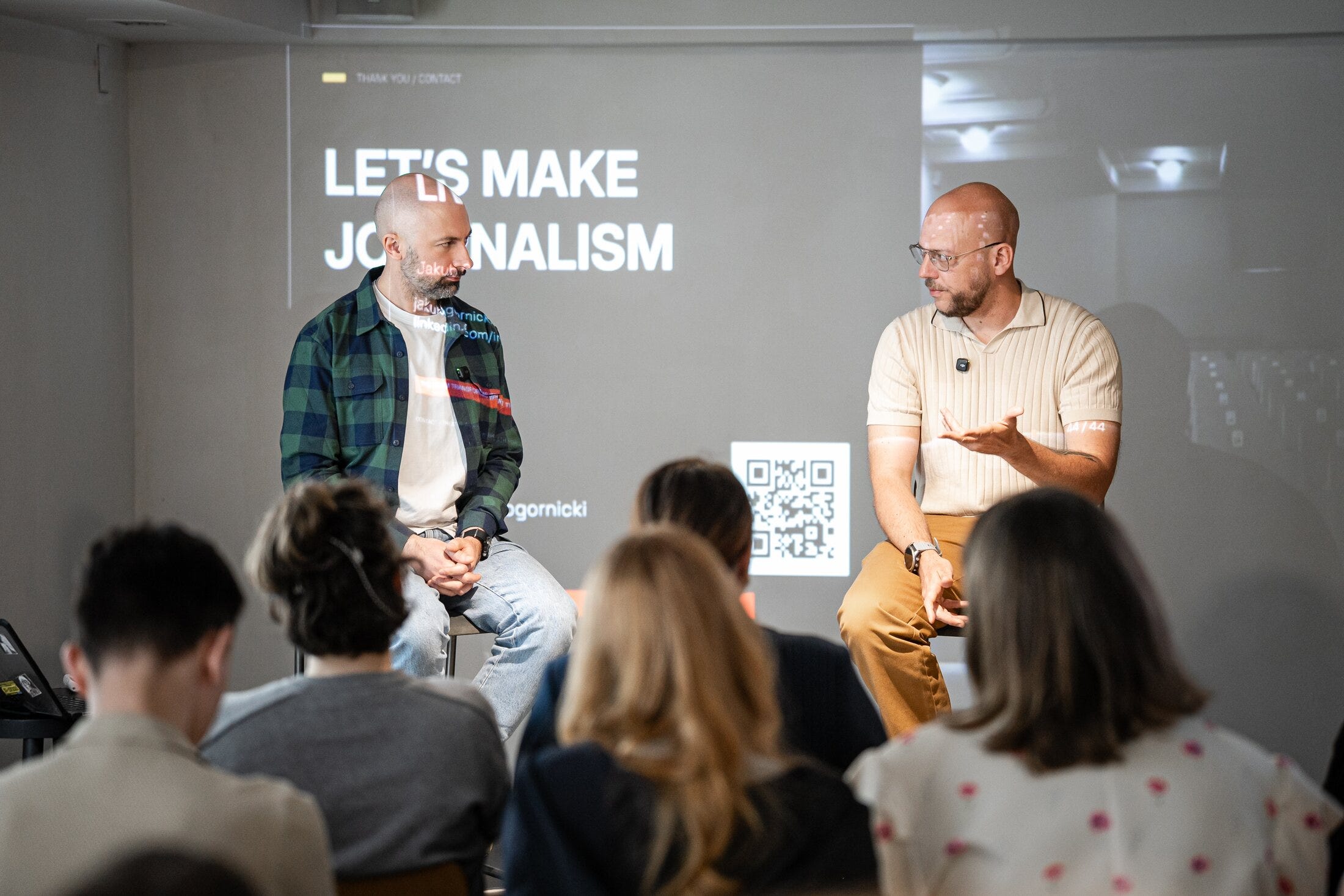
I went to Kyiv with one sentence on the screen: the screen can explain, but the room can transform.
It is easy to misunderstand that sentence as an attack on screens. It is not. Screens gave journalism speed, reach, memory, archives, maps, live feeds, open-source investigation, and impossible proximity. I owe my work to them.
But some stories do not only need delivery. They need a body. They need shared silence. They need a group of strangers to become temporarily responsible for the same reality. That was the spine of my KI Festival presentation: live journalism is not theatre about journalism. It is journalism finding a room.
REPORTED. PERFORMED. SHARED.
I wanted to make one thing very clear in Kyiv: live journalism does not mean abandoning facts for atmosphere. The facts remain the spine. Verification remains the discipline. The room does not excuse the work. It raises the ethical pressure.
My working definition is simple: live journalism is reported, performed, and shared. Reported, because it begins in evidence. Performed, because the journalist accepts presence instead of hiding behind a finished page. Shared, because the audience is not a traffic number. It is part of the event.
That is why theatre matters. Not because theatre decorates journalism. Because theatre knows how to hold breath, rhythm, attention, discomfort, humor, music, bodies, and the exact weight of a room.
The article gives knowledge. The stage gives pressure.
That pressure is not spectacle. It is a method. It asks what happens when the story stops being something you consume alone and becomes something you must sit inside with others.
WHAT THE ROOM CAN HOLD
The talk moved through live journalism around the world: Diario Vivo, Reporterslam, News on the Street, Zetland Live, Tot Hier en Verder, Sakartvelo. I did not show them as templates to copy. I showed them as proof that the field already exists in many temperatures.
A story can become a table. A public question can become a ball thrown into the audience. A city square can become the venue. Laughter can open the room. A stage object can carry more context than another explanatory paragraph.
Then I brought the argument home to Reakcja. Not as a finished answer for Ukraine. As a working proposition: what if journalism gave people not only facts, but a place to react? Not reaction as comment-section noise. Reaction as image, body, rhythm, silence, argument, and memory.
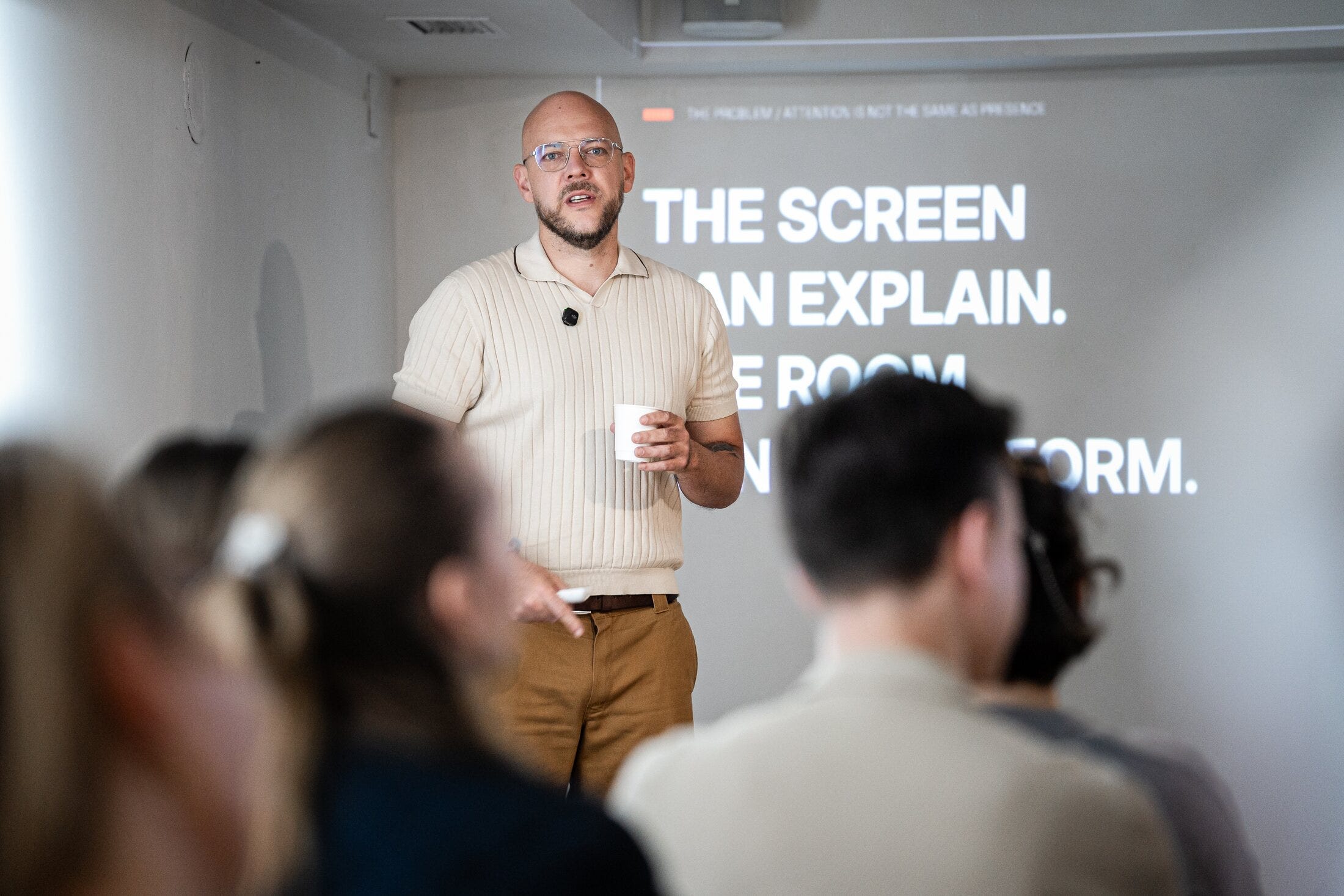
The opening claim: the screen can explain, but the room can transform.
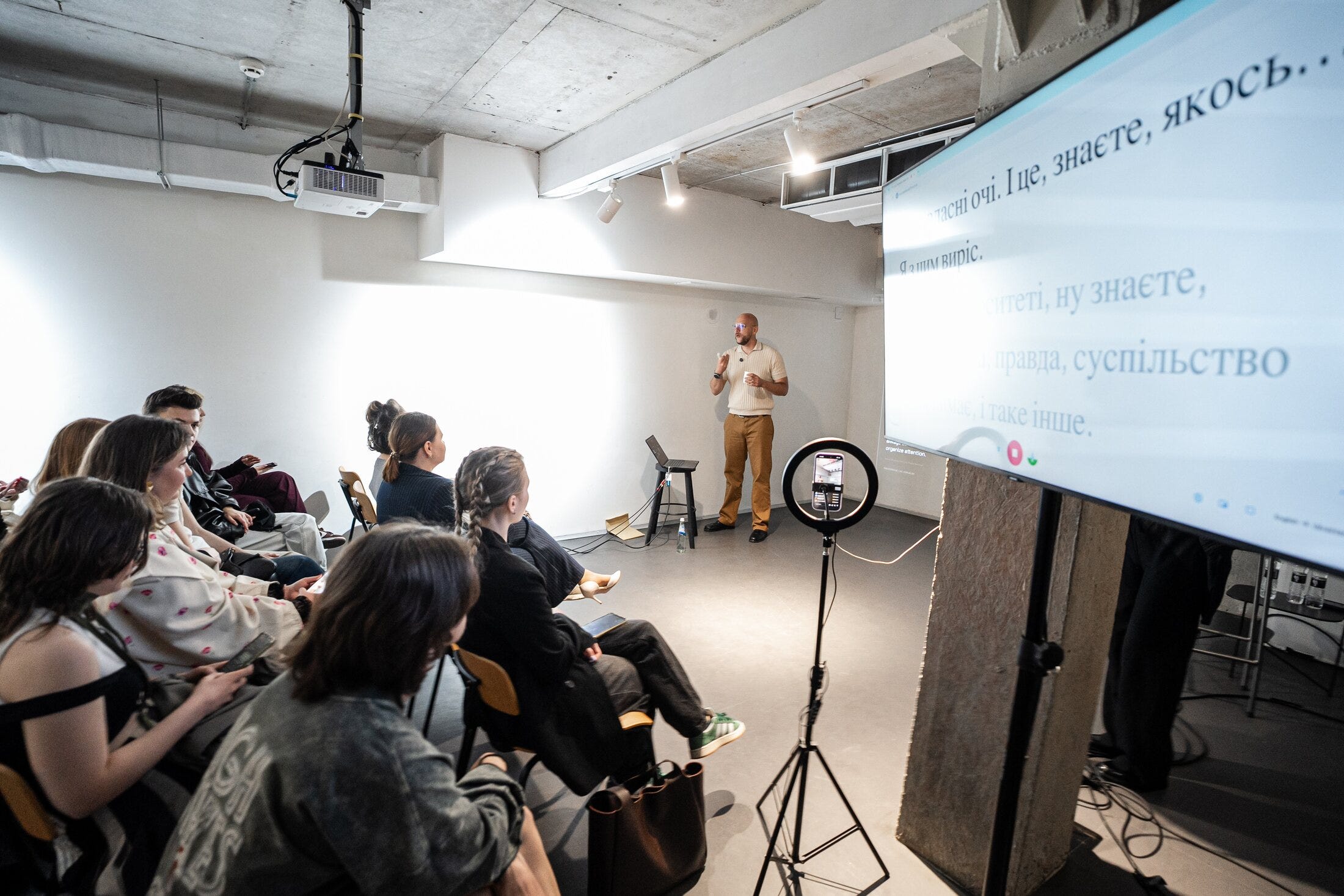
A small room changes the physics of attention. Photo: Artem Galkin.
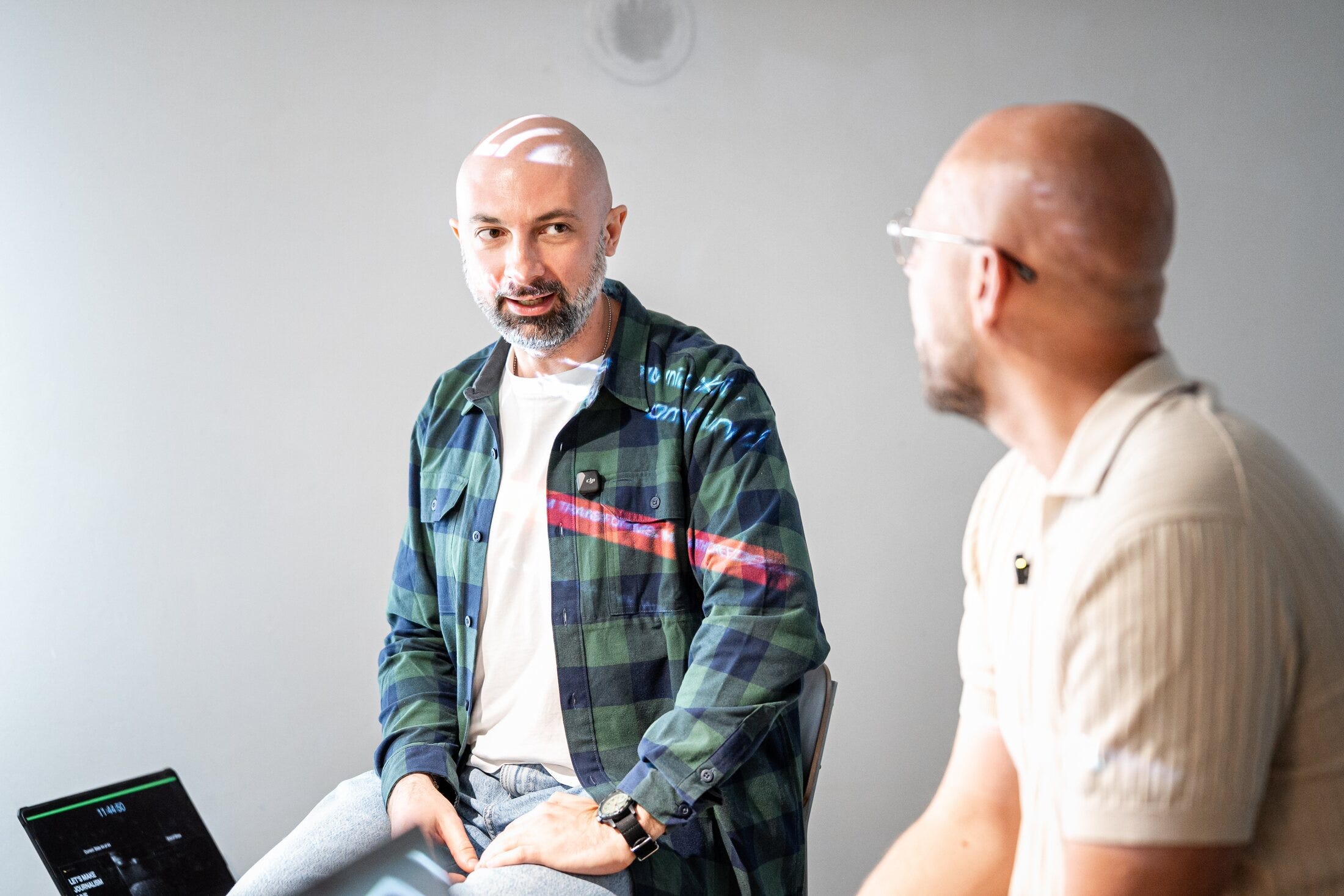
The moderated part moved from concept into practice: which Ukrainian stories are ready to leave the screen?
The closing pressure was practical: one journalist, one theatre-maker, one object, one room.
THE SCALE AROUND THE ROOM
The room was intimate. The festival around it was not. KI Festival’s recap reports 180 days of preparation, 13 events, 4 festival days, 12 locations, and 4000 guests. The international layer mattered too: guests from Lithuania, Poland, Germany, the United Kingdom, the United States, and Austria were listed in the public results.
KI Festival recap: preparation, events, days, locations, and audience scale.
International guests and countries listed in the festival recap.
Directors, theatres, pitching projects, and participants involved.
WHAT STORY IS READY TO LEAVE THE SCREEN?
I did not want to arrive in Kyiv with a packaged solution. Ukraine does not need someone from outside to explain the force of testimony, theatre, memory, or war. Ukrainian artists and journalists are already carrying realities that most of Europe still processes as headlines.
The useful question is more practical: which story needs a second public form? Which newsroom has material that cannot remain only a page? Which theatre space can hold it without consuming the pain? What object belongs in the room? What sound? What silence? What aftercare?
Live journalism is not a miracle format. It is a demanding one. It can become manipulative. It can turn witness into spectacle. It can confuse invention with truth if the boundary is not protected. That risk is exactly why it deserves serious craft.
For me, KI Festival became a small confirmation that this question travels. Not because everyone needs Reakcja. Because many places need new containers for reality. And Kyiv, of all cities, understands that reality is never only information.